
Our DOIT Program
Turning evidence-based healthcare guidelines into practical digital tools that help people understand their options, participate in shared decision-making, and make informed decisions about their care.
The DOIT Program is for people living with Polyendocrine Metabolic Ovarian Syndrome (PMOS, formerly PCOS), Early Menopause (EM), Premature Ovarian Insufficiency (POI), and unexplained infertility, as well as their families and support people, healthcare professionals, researchers, and health services committed to improving evidence-based care.
Designed with Consumers
At the heart of the DOIT Program is co-design.
People with lived experience of PMOS, POI/EM, and infertility have partnered with our research team throughout the development process. Their experiences and perspectives help ensure that our digital tools are relevant, practical, easy to understand, and responsive to the needs of consumers and families.
Why this research is important
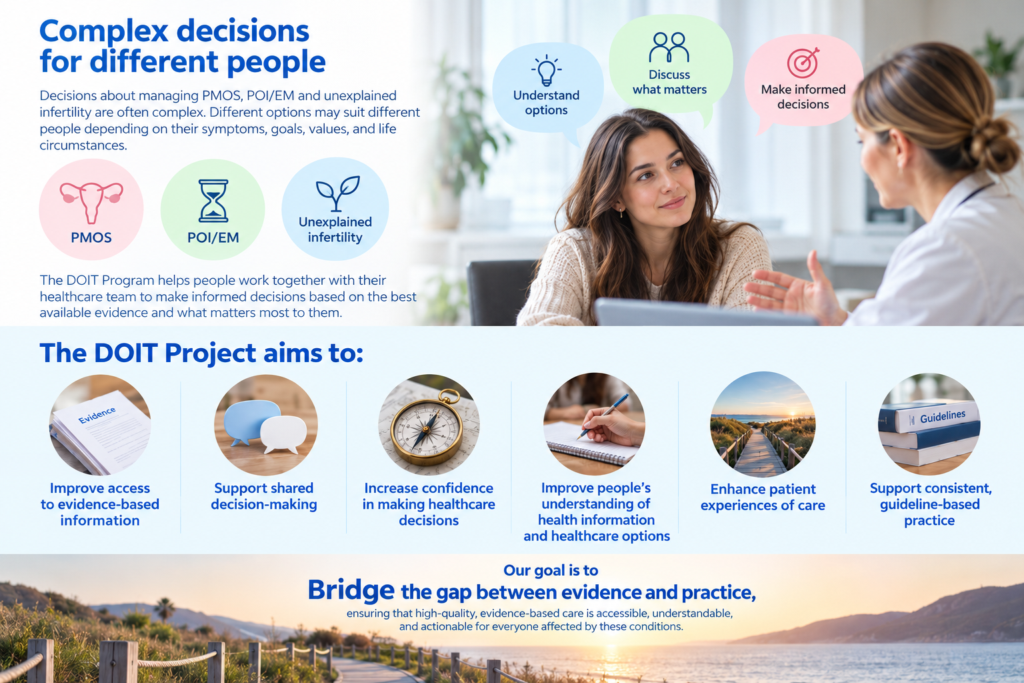
Decisions about managing PMOS, POI/EM and unexplained infertility are often complex. Different options may suit different people depending on their symptoms, goals, values, and life circumstances. The DOIT Program helps people work together with their healthcare team to make informed decisions based on the best available evidence and what matters most to them.
By making complex clinical evidence easier to understand and apply, our digital tools aim to improve understanding of health information, support meaningful conversations between patients and healthcare providers, and empower people to make informed decisions that align with their personal priorities and goals.
Our goal is to bridge the gap between evidence and practice, ensuring that high-quality, evidence-based care is accessible, understandable, and actionable for everyone affected by these conditions.
How do we do this?
Working with consumers, clinicians, and researchers, we are developing a suite of accessible digital resources, including evidence-based fact sheets, educational videos, question prompt lists, and interactive patient decision aids. These tools are designed to help people understand their condition, explore available diagnostic and treatment options, and feel confident participating in decisions about their healthcare.
We will also study the best ways to introduce these tools into everyday healthcare so they can be used consistently and effectively by patients and healthcare professionals.
What is a decision aid?
Working with consumers, clinicians, and researchers, we are developing a suite of accessible digital resources, including evidence-based fact sheets, educational videos, question prompt lists, and interactive patient decision aids. These tools are designed to help people understand their condition, explore available diagnostic and treatment options, and feel confident participating in decisions about their healthcare.
We will also study the best ways to introduce these tools into everyday healthcare so they can be used consistently and effectively by patients and healthcare professionals.
A decision aid is a tool that helps people understand their healthcare options and consider what is most important to them when making a decision. Decision aids do not replace discussions with healthcare professionals but are designed to support informed, shared decision-making.
Program Progress
Working with consumers, clinicians, and researchers, we are developing a suite of accessible digital resources, including evidence-based fact sheets, educational videos, question prompt lists, and interactive patient decision aids. These tools are designed to help people understand their condition, explore available diagnostic and treatment options, and feel confident participating in decisions about their healthcare.
We will also study the best ways to introduce these tools into everyday healthcare so they can be used consistently and effectively by patients and healthcare professionals.
A decision aid is a tool that helps people understand their healthcare options and consider what is most important to them when making a decision. Decision aids do not replace discussions with healthcare professionals but are designed to support informed, shared decision-making.
- 2 complete
- 2 underway
- 1 commencing
- 2 planned
Project areaWhat we’re doingProgress
-
1
Working with the community
Partnering with people with lived experience, community members, healthcare professionals, and other stakeholders to help design, test, and improve digital tools that support better health outcomes.
Complete -
2
Developing trusted information
Using national and international evidence and clinical guidelines to develop trusted digital resources that are easy to access and use.
Complete -
3
Building the Ask apps
Expanding the Ask apps so they do more than provide information. New features are being developed to help people manage their health and support conversations with their healthcare team.
Underway -
4
Integrating the apps into healthcare
Introducing and evaluating the digital tools in healthcare settings to ensure they are practical and useful for patients and clinicians.
Underway -
5
Testing the apps in real-world care
Testing the apps in healthcare settings to understand whether they are safe, effective, and beneficial for people with PMOS, Early Menopause/Premature Ovarian Insufficiency (EM/POI), and Unexplained Infertility.
Commencing -
6
Evaluating impact and value
Assessing the health benefits of the apps and whether they provide good value for patients, healthcare services, and the broader community.
Planned -
7
Sharing and expanding access
Sharing the findings from the project and supporting wider adoption of the Ask apps so that more people can benefit from them in the future.
Planned
Expected Benefits
The DOIT Project aims to:
- Improve access to evidence-based information
- Support shared decision-making
- Increase confidence in making healthcare decisions
- Improve health people’s understanding of health information and healthcare options
- Enhance patient experiences of care
- Support consistent, guideline-based practice
Who can take part?
People attending participating clinics may be invited to take part in research activities evaluating DOIT digital tools. Participation is voluntary and choosing not to take part will not affect your care. Information about relevant research activities will be provided, including how to opt out where applicable.
The DOIT Team
Led by Prof Lisa Moran, the DOIT Program brings together researchers, clinicians, implementation scientists, digital health experts, and consumer representatives with expertise in women’s health, fertility, and evidence-based care.
Get Involved
Interested in learning more about the DOIT Program?
Contact us at doit-women@monash.edu for more information