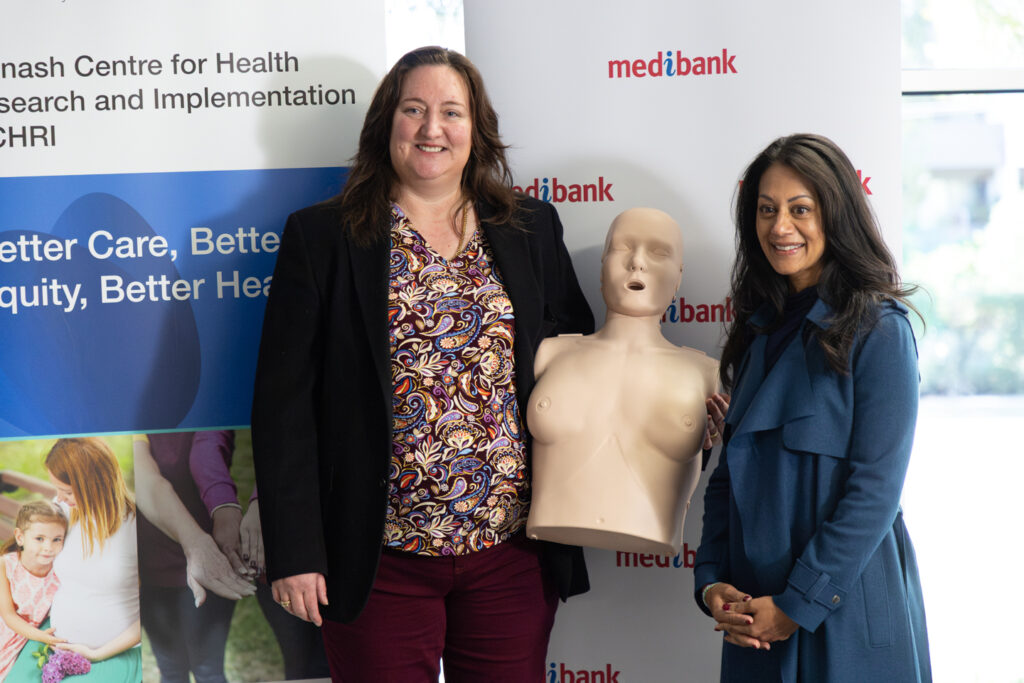
A new SeXX Specific differences in health – cardiovascular health professional development program is co-designed and includes the highest levels of evidence to upskill Australian clinicians, improving health outcomes for chronic disease and healthy ageing conditions for women.
The program is led by Monash University MCHRI’s Academy in Healthcare Improvement and Leadership, with funding from a Medibank Foundation grant, and will linked to the Australian Medical Associations (AMA) CPD Program.
Women’s Health Victoria are a supporting partner, and the new program was launched at their Don’t miss a beat for women’s heart health.
In many diseases, men and women have different presenting symptoms, pathophysiology, diagnostic tests, treatment, prevention and long term management strategies. These sex differences are not routinely taught in medical schools, leaving knowledge gaps for practicing doctors.
“More women than age-matched men are living with dementia, heart disease, osteoarthritis, osteoporosis and mood disorders. This co-designed evidence-based training will educate our current practicing doctors, but also extend to other health professionals, and be available to services, government and community to advance knowledge on gender differences,” said Project Lead Professor Cassandra Szoeke.
In the past, women have been excluded from clinical trials, yet in the last decade, new knowledge on sex differences in health has doubled. This team will be leading development and defining the best modes of delivery for uptake of education on these sex specific differences.
SeXX specific differences in cardiovascular health will begin in July.
“Women have specific risks for heart disease – including hot flushes, menopause, HDL and early life reproductive risks like polycystic ovary syndrome (PCOS), past pregnancy conditions such as gestational diabetes, and autoimmune conditions. They have different risk factors, symptoms and medication responses. Here by improving and filling in knowledge gaps on sex differences, we will significantly advance outcomes for women, particularly those with an increased risk”, she said.
Medibank Group Medical Director Dr Shona Sundaraj said that closing the knowledge and confidence gap can save lives.
“It’s 2026, and heart disease in women in Australia is still not adequately recognised or diagnosed. Medibank is proud to support Australia’s first cardiovascular education module focused specifically on women”, she said.
Partnering organisations include, MediBank Foundation, Women’s Health Victoria,Monash University, Monash Health, The Victorian Heart Hospital, Australian Medical Association, Department of Health Victoria, and the Australian Healthy Ageing, National Council of Women Victoria.
Contact: Amanda Hamilton
Monash Centre for Health Research and Implementation (MCHRI)
T: +613 8572 2667, info.mchri@monash.edu